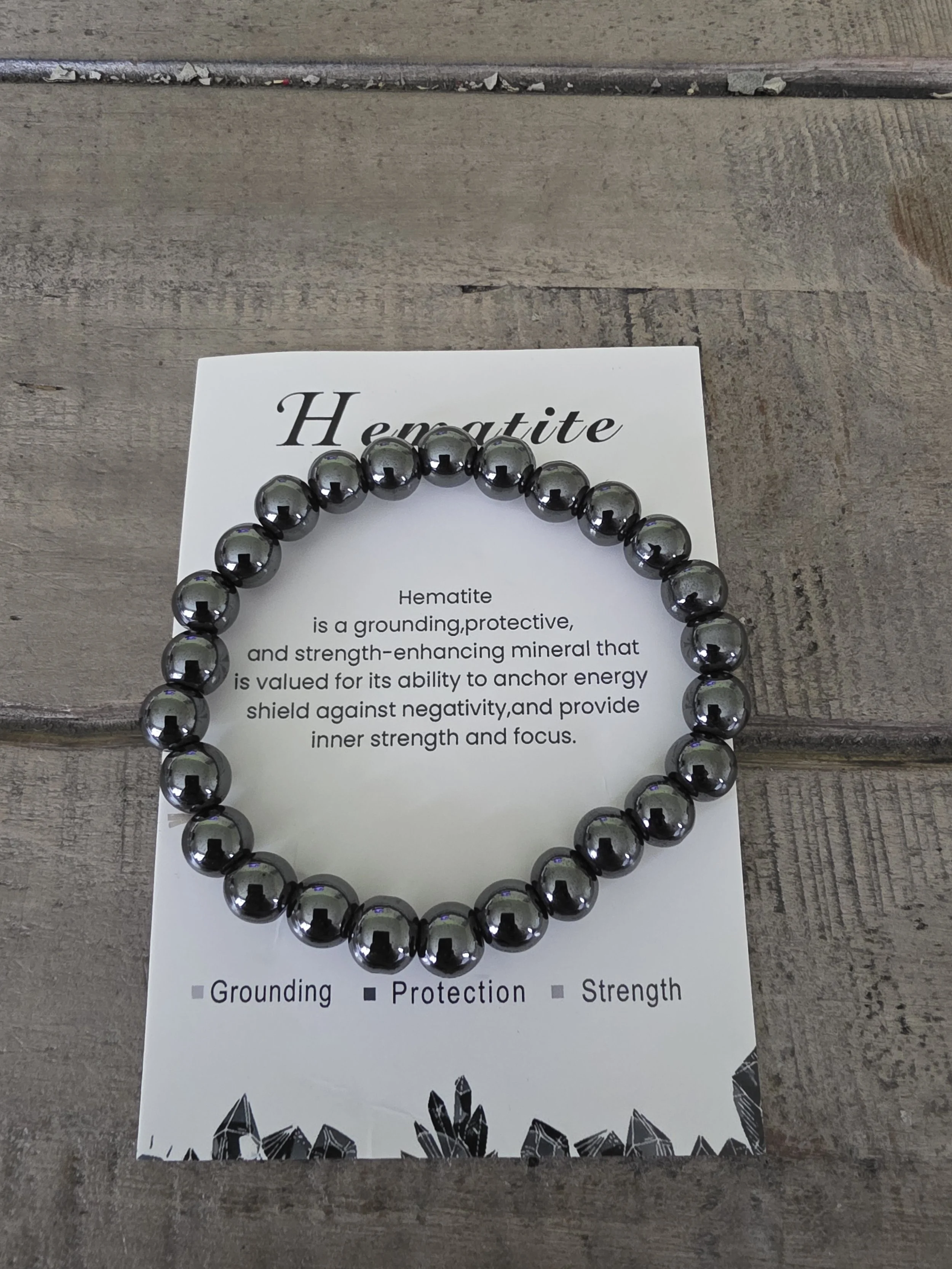
 Image 1 of 2
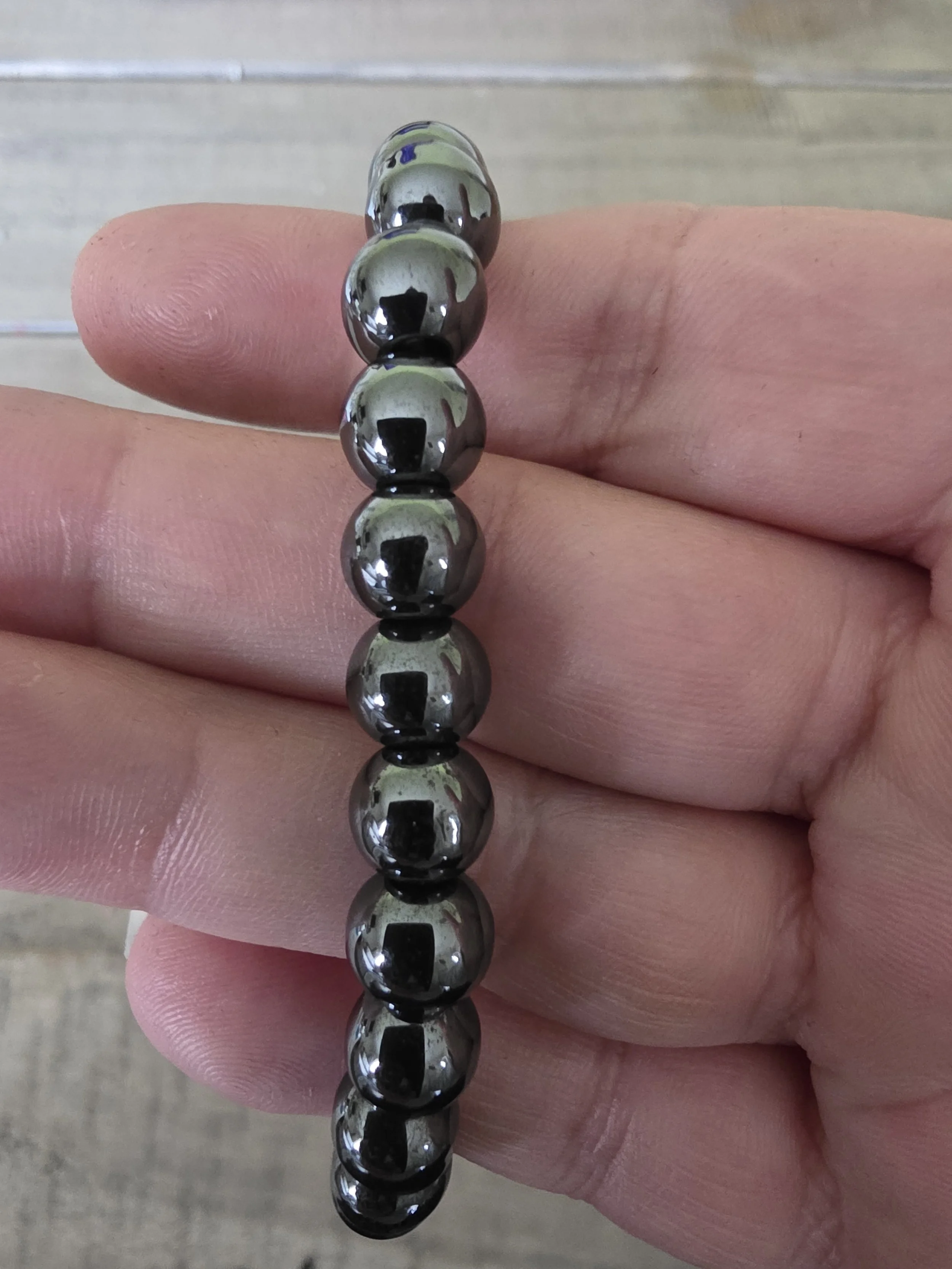 Image 2 of 2
Hematite properties
Overview
Hematite is an iron oxide mineral (Fe2O3) and one of the most common iron ores. It forms in a variety of environments, including sedimentary, metamorphic, and igneous settings, and is often found as massive, botryoidal, or crystalline specimens.
Physical properties
Color: Typically metallic gray to black; can also appear reddish-brown in earthy or iron-stained varieties.
Streak: Reddish-brown — the streak color is a key diagnostic feature.
Luster: Metallic to submetallic in crystalline forms; dull to earthy in massive forms.
Hardness: 5.5–6.5 on the Mohs scale.
Specific gravity: High, about 4.9–5.3, due to iron content.
Crystal system: Trigonal; common crystal habits include tabular or rhombohedral crystals and botryoidal masses.
Fracture and cleavage: No true cleavage; uneven to sub-conchoidal fracture.
Chemical properties
Composition: Iron(III) oxide, Fe2O3.
Stability: Stable at Earth's surface conditions; can oxidize or reduce depending on environment and transform into other iron minerals (e.g., magnetite under reducing conditions).
Magnetic behavior: Generally weakly magnetic or non-magnetic in pure form; some specimens (especially those intergrown with magnetite or containing structural defects) can show magnetism.
Optical and spectroscopic properties
Opaque in visible light for most specimens.
Strong absorption bands in the visible-to-infrared region related to iron, used in spectroscopic identification.
Commonly used as a pigment (red ochre) because of its stable color and lightfastness.
Geological occurrence and formation
Forms through direct precipitation from iron-rich waters, diagenetic concentration in sediments, hydrothermal activity, and weathering/oxidation of other iron minerals.
Common in banded iron formations (BIFs), lake and marine sediments, soil profiles, and as hydrothermal veins.
Uses
Iron ore: Major source of iron for steelmaking.
Pigment: Ground to produce red ochre and other earth pigments.
Jewelry and ornamental stone: Polished hematite is used in beads, cabochons, and carvings.
Industrial: Polishing powders (jeweler’s rouge), ballast, and radiation shielding in some contexts.
Metaphysical and cultural associations (commonly cited, not scientific)
Often associated with grounding, protection, strength, and circulation support in crystal-healing communities.
Historically used as amulets and pigments in various cultures.
Care and handling
Avoid exposing polished hematite to strong acids, which can react with iron oxides.
Store away from environments that promote rusting of associated metal fittings (e.g., jewelry clasps).
Clean with a soft cloth; avoid ultrasonic cleaners or harsh chemicals for polished decorative pieces.
Hematite properties
Overview
Hematite is an iron oxide mineral (Fe2O3) and one of the most common iron ores. It forms in a variety of environments, including sedimentary, metamorphic, and igneous settings, and is often found as massive, botryoidal, or crystalline specimens.
Physical properties
Color: Typically metallic gray to black; can also appear reddish-brown in earthy or iron-stained varieties.
Streak: Reddish-brown — the streak color is a key diagnostic feature.
Luster: Metallic to submetallic in crystalline forms; dull to earthy in massive forms.
Hardness: 5.5–6.5 on the Mohs scale.
Specific gravity: High, about 4.9–5.3, due to iron content.
Crystal system: Trigonal; common crystal habits include tabular or rhombohedral crystals and botryoidal masses.
Fracture and cleavage: No true cleavage; uneven to sub-conchoidal fracture.
Chemical properties
Composition: Iron(III) oxide, Fe2O3.
Stability: Stable at Earth's surface conditions; can oxidize or reduce depending on environment and transform into other iron minerals (e.g., magnetite under reducing conditions).
Magnetic behavior: Generally weakly magnetic or non-magnetic in pure form; some specimens (especially those intergrown with magnetite or containing structural defects) can show magnetism.
Optical and spectroscopic properties
Opaque in visible light for most specimens.
Strong absorption bands in the visible-to-infrared region related to iron, used in spectroscopic identification.
Commonly used as a pigment (red ochre) because of its stable color and lightfastness.
Geological occurrence and formation
Forms through direct precipitation from iron-rich waters, diagenetic concentration in sediments, hydrothermal activity, and weathering/oxidation of other iron minerals.
Common in banded iron formations (BIFs), lake and marine sediments, soil profiles, and as hydrothermal veins.
Uses
Iron ore: Major source of iron for steelmaking.
Pigment: Ground to produce red ochre and other earth pigments.
Jewelry and ornamental stone: Polished hematite is used in beads, cabochons, and carvings.
Industrial: Polishing powders (jeweler’s rouge), ballast, and radiation shielding in some contexts.
Metaphysical and cultural associations (commonly cited, not scientific)
Often associated with grounding, protection, strength, and circulation support in crystal-healing communities.
Historically used as amulets and pigments in various cultures.
Care and handling
Avoid exposing polished hematite to strong acids, which can react with iron oxides.
Store away from environments that promote rusting of associated metal fittings (e.g., jewelry clasps).
Clean with a soft cloth; avoid ultrasonic cleaners or harsh chemicals for polished decorative pieces.
Identification tips
Check streak: a reddish-brown streak distinguishes hematite from many black metallic-looking minerals.
Test heft: noticeably heavy for its size due to high specific gravity.
Observe luster and form: metallic, dense masses or tabular crystals differ from dull, earthy iron oxides.
Safety
Dust from cutting or grinding can contain fine iron oxide particles; use dust control and respiratory protection when working the material.
Hematite properties
Overview
Hematite is an iron oxide mineral (Fe2O3) and one of the most common iron ores. It forms in a variety of environments, including sedimentary, metamorphic, and igneous settings, and is often found as massive, botryoidal, or crystalline specimens.
Physical properties
Color: Typically metallic gray to black; can also appear reddish-brown in earthy or iron-stained varieties.
Streak: Reddish-brown — the streak color is a key diagnostic feature.
Luster: Metallic to submetallic in crystalline forms; dull to earthy in massive forms.
Hardness: 5.5–6.5 on the Mohs scale.
Specific gravity: High, about 4.9–5.3, due to iron content.
Crystal system: Trigonal; common crystal habits include tabular or rhombohedral crystals and botryoidal masses.
Fracture and cleavage: No true cleavage; uneven to sub-conchoidal fracture.
Chemical properties
Composition: Iron(III) oxide, Fe2O3.
Stability: Stable at Earth's surface conditions; can oxidize or reduce depending on environment and transform into other iron minerals (e.g., magnetite under reducing conditions).
Magnetic behavior: Generally weakly magnetic or non-magnetic in pure form; some specimens (especially those intergrown with magnetite or containing structural defects) can show magnetism.
Optical and spectroscopic properties
Opaque in visible light for most specimens.
Strong absorption bands in the visible-to-infrared region related to iron, used in spectroscopic identification.
Commonly used as a pigment (red ochre) because of its stable color and lightfastness.
Geological occurrence and formation
Forms through direct precipitation from iron-rich waters, diagenetic concentration in sediments, hydrothermal activity, and weathering/oxidation of other iron minerals.
Common in banded iron formations (BIFs), lake and marine sediments, soil profiles, and as hydrothermal veins.
Uses
Iron ore: Major source of iron for steelmaking.
Pigment: Ground to produce red ochre and other earth pigments.
Jewelry and ornamental stone: Polished hematite is used in beads, cabochons, and carvings.
Industrial: Polishing powders (jeweler’s rouge), ballast, and radiation shielding in some contexts.
Metaphysical and cultural associations (commonly cited, not scientific)
Often associated with grounding, protection, strength, and circulation support in crystal-healing communities.
Historically used as amulets and pigments in various cultures.
Care and handling
Avoid exposing polished hematite to strong acids, which can react with iron oxides.
Store away from environments that promote rusting of associated metal fittings (e.g., jewelry clasps).
Clean with a soft cloth; avoid ultrasonic cleaners or harsh chemicals for polished decorative pieces.
Hematite properties
Overview
Hematite is an iron oxide mineral (Fe2O3) and one of the most common iron ores. It forms in a variety of environments, including sedimentary, metamorphic, and igneous settings, and is often found as massive, botryoidal, or crystalline specimens.
Physical properties
Color: Typically metallic gray to black; can also appear reddish-brown in earthy or iron-stained varieties.
Streak: Reddish-brown — the streak color is a key diagnostic feature.
Luster: Metallic to submetallic in crystalline forms; dull to earthy in massive forms.
Hardness: 5.5–6.5 on the Mohs scale.
Specific gravity: High, about 4.9–5.3, due to iron content.
Crystal system: Trigonal; common crystal habits include tabular or rhombohedral crystals and botryoidal masses.
Fracture and cleavage: No true cleavage; uneven to sub-conchoidal fracture.
Chemical properties
Composition: Iron(III) oxide, Fe2O3.
Stability: Stable at Earth's surface conditions; can oxidize or reduce depending on environment and transform into other iron minerals (e.g., magnetite under reducing conditions).
Magnetic behavior: Generally weakly magnetic or non-magnetic in pure form; some specimens (especially those intergrown with magnetite or containing structural defects) can show magnetism.
Optical and spectroscopic properties
Opaque in visible light for most specimens.
Strong absorption bands in the visible-to-infrared region related to iron, used in spectroscopic identification.
Commonly used as a pigment (red ochre) because of its stable color and lightfastness.
Geological occurrence and formation
Forms through direct precipitation from iron-rich waters, diagenetic concentration in sediments, hydrothermal activity, and weathering/oxidation of other iron minerals.
Common in banded iron formations (BIFs), lake and marine sediments, soil profiles, and as hydrothermal veins.
Uses
Iron ore: Major source of iron for steelmaking.
Pigment: Ground to produce red ochre and other earth pigments.
Jewelry and ornamental stone: Polished hematite is used in beads, cabochons, and carvings.
Industrial: Polishing powders (jeweler’s rouge), ballast, and radiation shielding in some contexts.
Metaphysical and cultural associations (commonly cited, not scientific)
Often associated with grounding, protection, strength, and circulation support in crystal-healing communities.
Historically used as amulets and pigments in various cultures.
Care and handling
Avoid exposing polished hematite to strong acids, which can react with iron oxides.
Store away from environments that promote rusting of associated metal fittings (e.g., jewelry clasps).
Clean with a soft cloth; avoid ultrasonic cleaners or harsh chemicals for polished decorative pieces.
Identification tips
Check streak: a reddish-brown streak distinguishes hematite from many black metallic-looking minerals.
Test heft: noticeably heavy for its size due to high specific gravity.
Observe luster and form: metallic, dense masses or tabular crystals differ from dull, earthy iron oxides.
Safety
Dust from cutting or grinding can contain fine iron oxide particles; use dust control and respiratory protection when working the material.